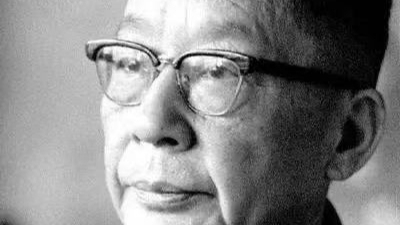
Lao She
Introduction
Lao She, born Shu Qingchun on February 3, 1899, to a Manchu family in Beijing, was a prolific Chinese writer whose works remain influential in Chinese literature. Lao She’s writings are renowned for their vivid portrayals of grassroots life and their sharp reflections on the social realities of his time. His mastery of the Beijing dialect, combined with his unique sense of humor, allowed him to intricately depict the local culture of Beijing. He died on August 24, 1966, leaving behind a legacy that continues to resonate with audiences worldwide.
Early Life and Education
Lao She was born in Beijing to a Manchu family, at a time when the Qing Dynasty (1644-1911) was on the verge of collapse. His father was a guard in the Qing Imperial Army and was killed during the Boxer Rebellion when Lao She was just a child. This early loss had a profound effect on him, influencing his worldview and his later works. In 1913, Lao She was admitted to Beijing No 13 Middle School but dropped out due to poverty in his family. The same year, he was accepted to study at Beijing Normal School, which offered him free tuition and accommodation. He graduated in 1918. His education and personal experiences in Beijing became the foundation for his vivid storytelling and keen insights into human nature and society.
Early Career
In 1918, Lao She became one of the youngest headmasters of Fangjia Hutong Primary School after graduating from Beijing Normal School. In the autumn of 1922, Lao She started teaching at Tianjin Nankai High School. The same year, he published a poem, New Voice Overseas, and a novel, Her Failure, under the name She Yu in a magazine founded by students studying in Japan. In 1923, Lao She published the short story Xiao Ling'er in the Tianjin Nankai High School magazine under the name She Yu.
Literary Career
Lao She’s literary career began in the 1920s when he traveled abroad to teach Chinese in London. During this period, he was exposed to Western literature and culture, which deeply influenced his writing style. His time in London inspired one of his most notable works, Mr. Ma and Son, which explores themes of cultural conflict and adaptation.
Upon returning to China, Lao She became a prominent figure in the literary scene. His novels, such as Rickshaw Boy (Camel Xiangzi) and Four Generations Under One Roof (Sishi Tongtang), are celebrated for their rich character development and exploration of the human condition. Rickshaw Boy, in particular, has been adapted into numerous films, plays, and operas, cementing its status as a classic of Chinese literature.
Lao She was also an accomplished playwright. His play Teahouse, which premiered in 1958, is a masterpiece that captures the changing social landscape of China from the late Qing Dynasty to the mid-20th century. It remains one of the most performed plays in China and is beloved for its detailed characters and insightful commentary on social change.
Themes and Style
Lao She’s works are characterized by their deep empathy and humor, often focusing on the lives of ordinary people. He had a unique ability to weave humor into his narratives, even while tackling serious issues such as poverty, societal transformation, and the complexities of the human spirit. His use of the Beijing dialect added authenticity and depth to his characters, making them relatable to a wide audience. Lao She's keen observation of societal norms and his ability to reflect them in his writing allowed him to create narratives that were both entertaining and thought-provoking.
Influence and Legacy
Lao She's influence extends beyond literature into cultural and social discourse. His works have been adapted into numerous films, television series, and stage productions, keeping his stories and characters alive for new generations. Notably, the Lao She Theater Festival, established in his honor, continues to showcase adaptations of his works along with contemporary theatrical performances that draw inspiration from his themes and style.
Despite the challenges he faced, Lao She’s contributions to literature remain significant. His ability to capture the essence of Beijing life and his portrayal of the universal human experience have made his works timeless.
Personal Life
Lao She married Hu Jieqing, a painter, and they had four children. His family life in Beijing provided him with the stability and inspiration that fueled much of his writing. Despite the personal and political challenges he faced, his family remained an important source of support throughout his career.
Lao She's enduring legacy is a testament to his exceptional talent and his deep understanding of human nature. His works continue to be studied and appreciated for their cultural significance and their portrayal of the human condition in a rapidly changing world.








